Boo Thang Svg: A Designer’s Honest Take for Embroidery
When I first opened Boo Thang Svg, I was curious how a design with such a playful, nickname-driven energy would translate into stitched form. The name alone conjures up gifts for couples, baby shower presents, or just a cheeky personalized item for someone close. As someone who reviews machine embroidery designs for real project use, I look beyond the instant download appeal. I want to know if this design holds up on fabric, whether it feels complete after stitching, and if it delivers the warmth or humor that customers expect when they order custom apparel or handmade gifts. This design sits squarely in the Crafts and Graphics category, but it also has real potential for embroidered products that sell.
First Impression: Playful, Personal, and Surprisingly Versatile
Boo Thang Svg has a light, affectionate tone. It feels like something you would put on a tote bag for a best friend, a sweatshirt for a partner, or even a baby onesie as a humorous twist on a classic nickname. The design layout is clean enough that it does not overwhelm small items, but bold enough to stand out on adult apparel. The shape and lettering create a friendly, approachable mood. It does not scream for attention, but it invites a smile. For embroidery designers, this is the kind of design that works well when you want to add personality without going full novelty. It feels like a conversation starter, but a gentle one.
The visual personality of Boo Thang Svg leans casual and intimate. This is not a design for formal corporate merchandise or high-end boutique lines. It belongs in the world of personalized gifts, small shop merchandise, and handmade products that celebrate relationships. I immediately thought of couple-themed craft fair items, Etsy listings for anniversary gifts, and even baby shower favors. The design would also work nicely as an embroidered patch on a denim jacket or a canvas backpack. The key is matching the mood of the design with the relationship the gift represents.
Real Case Scenario: Stitching a Custom Tote Bag for a Small Shop
I decided to test Boo Thang Svg on a mid-weight canvas tote bag. This is a product I often recommend to Etsy sellers and craft business owners because it offers good fabric stability, a flat stitching surface, and high perceived value for the customer. For this project, I used a medium hoop size and a cutaway stabilizer to keep the stitches crisp. The design stitched out cleanly, with the letter forms holding their shape well. The satin stitch areas, where the letters had thicker strokes, came out smooth and even. The fill stitches sat flat against the canvas without puckering.
After the first test, I tried the same design on a preshrunk cotton sweatshirt. This is a product that many small shop owners use for holiday gifts and personalized apparel. On the sweatshirt, Boo Thang Svg retained its clarity, but I noticed that the fabric stretch required a bit more stabilizer attention. I used a medium-weight tearaway with a layer of fusible interfacing on the back of the stitching area. The design still looked strong and readable. The playful message came through without looking distorted. For anyone planning to sell finished products with this design, I recommend testing on your specific fabric type before listing. The design performs well, but stretchy knits demand good stabilization.
Performance Across Different Embroidery Applications
I have tested Boo Thang Svg on several product types to understand its range. On a baby onesie, the design felt appropriately scaled and cute. The small stitch details held up without overwhelming the tiny garment. On a structured cap, the design needed careful hoop placement because the curved surface can distort lettering. I suggest using a cap frame and a dense stabilizer if you attempt this. On a kitchen towel or tea towel, the design worked well as a decorative accent, though I recommend avoiding overly textured fabrics that might hide thin stitch lines.
For embroidered patches, Boo Thang Svg is a strong candidate. The design has enough visual weight to work as a standalone patch on a jacket, backpack, or tote. The lettering does not rely on extremely fine details, so the patch edge can be trimmed cleanly. If you are producing patches for a small shop or as part of a craft fair product line, this design can be digitized as an applique with a fabric background, or as a direct embroidery patch with a satin stitch border. Both approaches work, but the applique version adds a handmade texture that customers often appreciate.
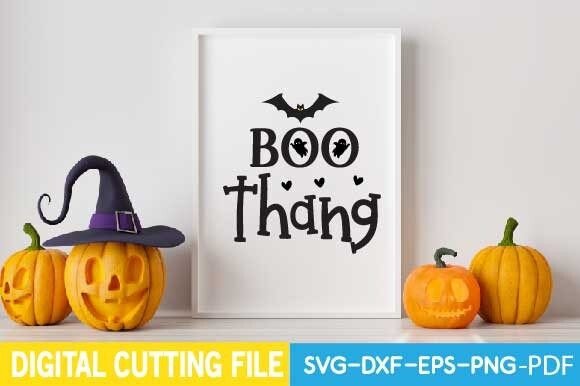
The design also performs well in mockups and printable previews. If you sell digital products or use mockups for your Etsy listings, Boo Thang Svg renders clearly at screen resolution. The shape reads well in both color and black-and-white previews. This matters for customer trust because a blurry or confusing mockup can hurt buyer engagement. The clarity of this design in digital form helps you present a professional image before the customer ever sees the stitched product.
Where to Use This Design Carefully
No design is perfect for every surface, and Boo Thang Svg has a few limitations worth noting. The design uses moderate stitch density in the filled areas, so on very thin or delicate fabrics, you may see show-through or slight puckering. For lightweight silks or fine cotton voile, I would skip this design or use a heavy water-soluble stabilizer on top. On dark fabrics, the thread color contrast becomes critical. If you stitch this design in a dark thread on a dark background, the readability drops. I recommend light or bright thread colors on dark garments, and darker thread on light fabrics. A simple contrast check before stitching saves a lot of frustration.
Small hoop sizes can also be a challenge. If you are working with a 4x4 hoop, you may need to check the scale of the lettering. Some letters may become too small to stitch clearly if you shrink the design too much. I advise testing the design at your intended size on scrap fabric first. For caps or curved surfaces, be extra careful with the alignment of the first and last letters. The curve can pull the design off-center if you do not use a proper cap frame. For dense stitch areas, especially where letters overlap or sit close together, watch for thread breaks or fabric distortion. A quality stabilizer and proper tension settings handle most of these issues, but testing is non-negotiable.
For products that need frequent washing, like kitchen towels or baby blankets, the design holds up well if you use a good stabilizer and quality thread. I recommend a polyester or rayon thread for colorfastness, and a cutaway stabilizer for long-term durability. Tearaway stabilizers may break down over multiple washes, especially on items that see heavy use. For commercial embroidery projects where the finished product will be sold, I always advise using cutaway stabilizer as a standard practice.
Visual Appeal, Product Value, and Customer Trust
When a customer sees Boo Thang Svg on a finished product, they are buying the feeling behind the words. The design evokes warmth, affection, and a sense of personal connection. For a handmade product, that emotional hook is valuable. It turns a simple tote bag or sweatshirt into a gift that feels chosen and personal. For small business owners and Etsy sellers, this design can increase the perceived value of your merchandise because it looks intentional. It is not a generic phrase slapped on fabric. The design has a crafted quality that signals care.
The design also supports brand consistency if you sell multiple products with a similar tone. If your shop specializes in relationship-themed or nickname-based embroidery, Boo Thang Svg fits naturally into that lineup. Customers who buy one personalized gift from you will recognize the style and return for more. The visual appeal of the design translates directly into buyer engagement. Clear, readable, and well-proportioned embroidery makes customers feel confident that they are getting a quality product. That confidence leads to repeat sales and word-of-mouth recommendations.
Practical Designer Notes Before You Stitch
Before you commit Boo Thang Svg to a client project or a batch of products for your craft business, run through a few checks. Test the design on scrap fabric that matches your final product. Confirm the hoop size you plan to use. Review the stitch density in your embroidery software if you have it. Check whether the design includes any tiny details that might not stitch cleanly at smaller sizes. I always recommend testing the design in black and white on paper first to see the contrast and layout. Then test it in thread on a light fabric and a dark fabric to see how the colors interact.
Proper stabilizer choice is essential. For most knit fabrics, use a medium-weight cutaway. For wovens like canvas or denim, a tearaway may work, but cutaway is still safer if you want long-term durability. For stretchy fabrics like jersey or spandex, use a fusible stabilizer to prevent the design from distorting during stitching. Thread color also matters a lot. Since the design is text-based, the readability depends entirely on contrast. Avoid matching the thread color too closely to the fabric color. A subtle contrast might look elegant in a digital mockup, but in real stitching, it can make the words hard to read.
One more note: before you sell finished products or digital files featuring Boo Thang Svg, check the licensing terms. Even though this design is an instant download cutting file compatible with many cutting software machines, the license for commercial use is not automatically guaranteed. Confirm whether you can use it on products you sell, or whether you need to purchase a separate commercial license. This step protects your business and your customer relationships. It also ensures that your Etsy listings and craft fair products are fully compliant. I have seen too many small shop owners assume a design is free for commercial use when it is not. Do not make that assumption here.
Final Thoughts on Boo Thang Svg for Real Projects
Boo Thang Svg is a design that delivers on its promise. It is playful, personal, and versatile enough to work across a range of products, from baby embroidery to custom apparel to boutique merchandise. It does not overcomplicate itself with unnecessary details. The design lets the message speak, and that is exactly what customers want when they order a personalized gift or a handmade product. For embroidery designers, small business owners, and creative entrepreneurs, this design offers a solid foundation for products that feel warm, intentional, and commercially viable. Just remember to test, stabilize, and check your licensing before you stitch. That is the difference between a product that looks good in a mockup and one that earns you repeat customers.