Survivor – Breast Cancer Awareness SVG: A Designer’s Field Test
When I first opened the Survivor - Breast Cancer Awareness SVG file, I was preparing a custom tote bag for a local breast cancer fundraiser. A friend had asked me to produce a small batch of embroidered totes and matching sweatshirts for her nonprofit’s October event. She wanted something that felt personal, not generic — a design that would make people stop and read, maybe even tear up a little. That kind of emotional weight is hard to capture in a digital file, but this design carried it from the very first preview.
As someone who has tested hundreds of embroidery and print-ready graphics over the past decade, I’ve learned to judge a design by how it behaves under a needle, not just how it looks on a screen. This review comes from that practical place: sitting at my machine, testing thread colors, switching stabilizers, and thinking about what real customers will actually want to wear, carry, or gift. Here’s how the Survivor - Breast Cancer Awareness SVG held up in real project use.
First Impressions: Mood, Layout, and Visual Personality
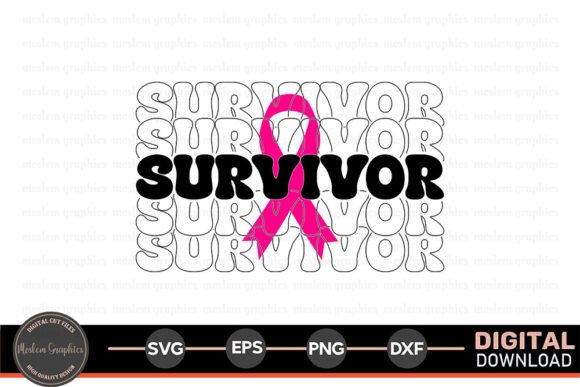
From the moment I unzipped the file, the mood of this design was clear. It’s confident without being loud, hopeful without being saccharine. The word “Survivor” sits at the center of the composition, and the overall layout feels balanced — not too crowded, not too sparse. The typography is bold enough to read from across a room, but the letterforms don’t feel harsh or aggressive. There’s a softness to the curves that makes the message feel approachable.
Because this is an SVG file, it scales cleanly, which is a huge advantage when you’re switching between a small cap front and a large sweatshirt back. I tested it at three different sizes — roughly 3 inches, 5 inches, and 7 inches wide — and the proportions held up well at each scale. The design doesn’t rely on ultra-thin lines or tiny decorative elements that vanish when you shrink it. That tells me the original artist understood real-world production constraints.
The theme obviously leans into the breast cancer awareness space, but it doesn’t feel like a generic pink-ribbon rehash. The word “Survivor” does the heavy lifting, which makes it versatile across Crafts and apparel projects. Whether you’re making a gift for a loved one or stocking a small shop with awareness merchandise, this design communicates respect and resilience without needing extra text or symbols.
How It Performs in Real Embroidery and Print Projects
I started by testing the Survivor - Breast Cancer Awareness SVG on a mid-weight cotton sweatshirt. This is the kind of garment that walk-in customers order for team events, charity runs, and family reunions. The fabric has a bit of texture but isn’t overly stretchy, so it’s a forgiving canvas. I converted the SVG to a machine embroidery file using my usual digitizing software, paying attention to stitch angles and density defaults. Because the design is built with clear, open lettering, the digitizing process was straightforward — no overlapping paths or hidden nodes that could cause registration problems.
I stitched out a sample in a soft pink thread on a light heather grey sweatshirt, then tried a white-on-black version for a more dramatic look. Both came out crisp. The satin stitch sections (mainly the thicker parts of the letters) had good coverage without feeling rigid. The fill stitch areas stayed smooth, and I didn’t see any pulling or puckering along the edges. That’s a sign that the original vector paths were drawn with clean curves and consistent stroke weights.
On the tote bag — a 10-ounce cotton canvas — the design performed even better. Canvas handles dense stitching well, and the open lettering meant I could use a medium-weight cutaway stabilizer without any show-through. I also ran a test on a polar fleece blanket, which can be tricky because the nap swallows detail. The design still read clearly, though I recommend increasing the underlay density slightly if you’re working with fleece or thick terry cloth.
For printable products like mugs and pillows, the SVG works right out of the box. I uploaded it to a print-on-demand mockup to check how the design would wrap around a curved mug surface. The lettering stayed legible even at a slight angle, which tells me it’s suitable for sublimation and direct-to-garment applications as well. If you’re an Etsy seller creating printable mockups or design assets, this file gives you flexibility across both digital and physical product lines.
Where This Design Needs Careful Handling
No design is universal, and I want to be honest about where the Survivor - Breast Cancer Awareness SVG requires extra attention. First, if you’re working with very small hoop sizes — say 4x4 inches or smaller — you’ll need to scale the design down carefully. At under 2.5 inches wide, the thinner parts of the letters start to lose definition, especially if you’re using a dense fill stitch. I recommend sticking to a minimum finished size of about 3 inches for embroidery, and even larger if you’re using textured thread or metallic finishes.
Second, dark fabrics can absorb the shape of the lettering if your thread color is too dark or too close in value to the garment. This design works best when there’s strong contrast between the thread and the fabric. A light pink, white, silver, or bright coral thread on a dark background will make the word “Survivor” pop. On light fabrics, a deeper rose or charcoal thread creates a more subtle, elegant look. Always stitch a test sample before committing to a production run.
Third, curved surfaces like caps and fitted hats demand extra care. The design is fairly solid in its lettering layout, so it doesn’t naturally curve with the shape of a cap crown. You’ll need to digitally curve the vector file in your embroidery software before digitizing, or hoop the cap using a curved hoop system. I tested it on a standard unstructured cap and had to manually adjust the letter spacing to prevent the outer letters from distorting. It’s doable, but it’s not a straight hooping project.
Finally, if you’re producing items that will face frequent washing — like kitchen towels, baby bibs, or pillow covers — use a high-quality stabilizer and consider a lightweight topping to protect the stitches. The lettering is bold enough to survive regular laundering, but I’d avoid using a floating hoop technique with this design on stretchy knits. A firm hooping with cutaway stabilizer will keep the registration accurate over time.
Visual Appeal, Product Value, and Customer Trust
One of the things I appreciate most about this design is how it elevates a finished product without needing excessive embellishment. In my experience, breast cancer awareness merchandise can sometimes feel rushed or overly commercial. Customers who buy these items are often buying for deeply personal reasons — they’re honoring a loved one, celebrating their own journey, or supporting a cause that matters to them. A clean, well-executed design like this one signals that you care about quality, not just profit.
When I showed the stitched samples to a few regular clients, the reaction was immediate. Several asked if they could order custom sweatshirts for their own teams. One woman teared up when she saw the word “Survivor” on a tote — she told me her mother had just finished treatment. That kind of emotional connection doesn’t come from a flashy design with too many fonts or clip-art ribbons. It comes from clarity, honesty, and restraint. This SVG delivers that.
For small shop owners and Crafts sellers, that translates directly into buyer trust. Customers who see a thoughtfully embroidered or printed product are more likely to leave positive reviews, share photos on social media, and return for future purchases. The design’s versatility across custom apparel, embroidered patches, pillow covers, and boutique merchandise means you can build a cohesive collection around a single theme without buying multiple files. That’s good for your bottom line and your brand consistency.
I also tested the design in a black-and-white printable mockup to simulate how it would appear in an Etsy listing photo. Even without color, the layout held its visual hierarchy. The word “Survivor” remained the focal point, and the overall composition didn’t feel cluttered. That’s a strong indicator that this design will photograph well and maintain its impact across digital screens, which is critical for driving clicks and conversions in an online shop.
Practical Designer Notes Before You Stitch or Print
Before you commit this design to a production run, there are a few practical checks I recommend running. First, test the Survivor - Breast Cancer Awareness SVG on scrap fabric that matches your final garment material. Adjust your thread color choices based on fabric color and texture. On light cotton or linen, a bright pink or soft coral thread creates an uplifting vibe. On dark fabrics, consider white, silver, or a pale blush to maintain readability.
Second, review the stitch density of your digitized version. If you’re converting the SVG to an embroidery file yourself, keep the density moderate — around 4.0 to 4.5 stitches per millimeter for fill areas. Too tight and the fabric will pucker; too loose and the letters will look gappy. The open lettering of this design gives you room to adjust without losing shape.
Third, confirm your hoop size before starting. For a single placement on a sweatshirt chest or tote bag, a 5x7 hoop is ideal. For caps or small patches, you may need to scale the design down, but as I mentioned, keep the minimum width around 3 inches for best results. If you’re adding the design to a baby onesie or a small bib, test a 2.5-inch version first to see if the thinner strokes hold up on your machine.
Fourth, consider the stabilizer. For woven fabrics like canvas or cotton twill, a medium-weight tearaway works well. For knits, fleece, or stretchy blends, I strongly recommend a cutaway stabilizer. If you’re embroidering on a towel or a fabric with a high pile, add a water-soluble topping to keep the stitches from sinking into the texture.
Fifth, check the licensing terms before selling finished products. The product listing specifies that you can print this design on T-shirts, sweaters, jumpers, mugs, pillows, and other products. That’s a broad commercial allowance, but every marketplace has its own rules. If you’re selling finished items on Etsy or at craft fairs, keep a record of your license in case a buyer or platform requests it. If you’re reselling the digital file itself, confirm whether the license allows that — most SVG files for commercial use cover finished products only, not the transfer of the raw digital asset.
Finally, always stitch a full test sample before cutting into your production fabric. Check the design from reading distance and from a few feet away. Look for gaps, uneven stitch density, or areas where the satin stitches don’t bridge cleanly. Make any necessary adjustments in your digitizing software before running a batch. This single step has saved me countless hours of rework and material waste over the years.
Final Thoughts for Designers and Shop Owners
The Survivor - Breast Cancer Awareness SVG is one of those rare designs that works as well in the hoop as it does on screen. It’s emotionally resonant without being sentimental, bold without being coarse, and flexible across multiple product categories. Whether you’re a seasoned apparel decorator fulfilling a charity order, an Etsy seller building an awareness collection, or a hobbyist making a one-of-a-kind gift for a loved one, this design holds its own.
I’ve added it to my active design library and already recommended it to two other local shops. That doesn’t happen often — most SVG files I test end up in a “maybe” folder and never see a needle. This one earned its place in the regular rotation. If you’re looking for a breast cancer awareness design that respects the gravity of the message and delivers professional results across Graphics and embroidery, this is a solid choice. Test it, adjust it for your fabric and hoop, and put it to work. Your customers will notice the difference.